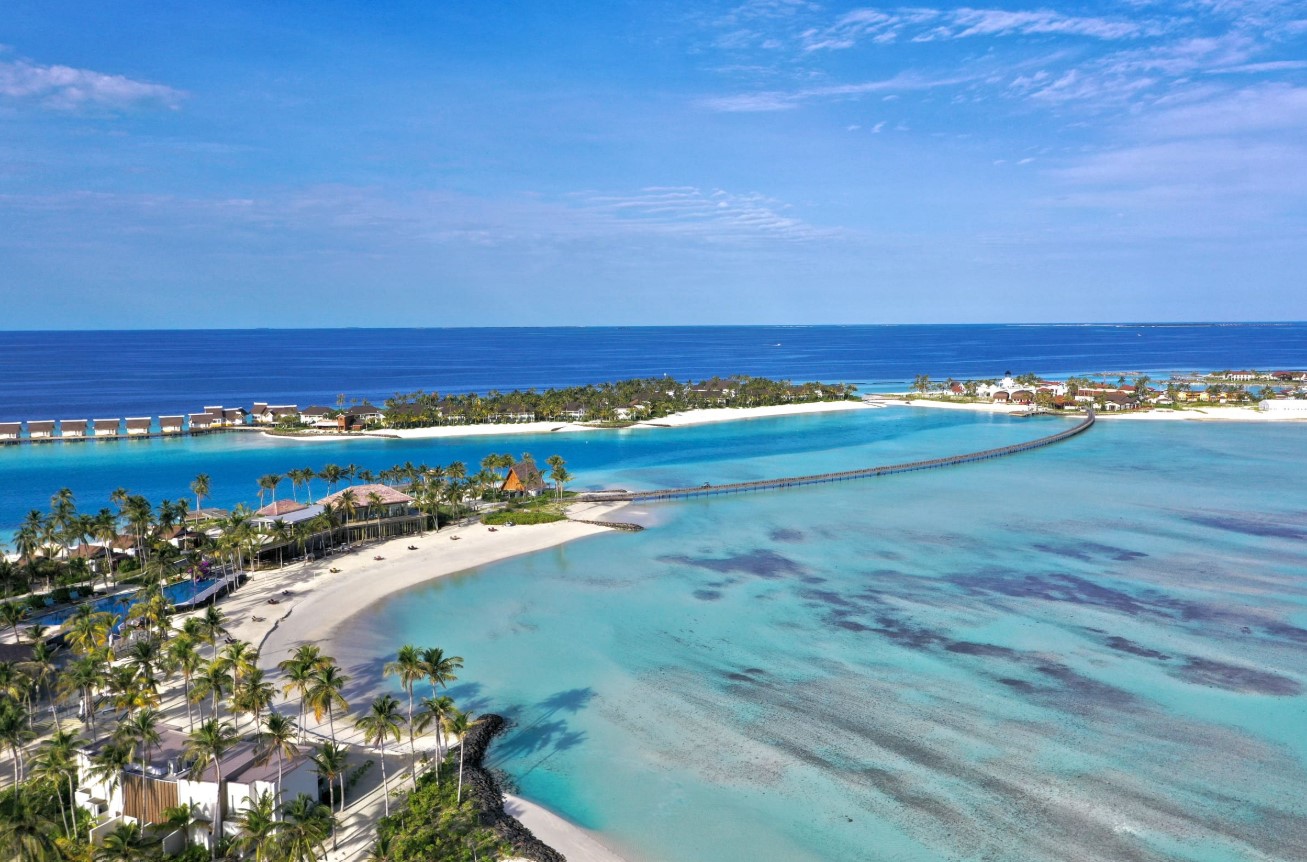
Choosing between a speedboat-accessible and a seaplane-accessible resort is one of the first decisions to make when planning a Maldives holiday, and it shapes more than the journey itself. It affects your arrival time, your budget, how much luggage you can bring and even which atoll you stay in. Some Maldives resorts are close to the airport and do not require a seaplane transfer, which makes them a practical choice for short stays, families and late arrivals, while seaplane resorts open up the more remote atolls. Two examples show the contrast well: Hard Rock Hotel Maldives, reached by a short speedboat ride, and Soneva Fushi, reached by seaplane.
Overview
Almost every resort in the Maldives sits on its own island, so the transfer from Velana International Airport is part of the holiday. Speedboat-accessible resorts are mainly in the North and South Malé Atolls, the islands closest to the airport, with journeys of roughly 15 to 90 minutes. Seaplane-accessible resorts are mostly in atolls such as Ari, Baa, Lhaviyani and Noonu, with flights of around 25 to 50 minutes. Choosing between them goes beyond finding the quickest route to the beach, and depends largely on your flight times, your budget and the kind of island you would like to wake up on.
Speedboat vs Seaplane Resorts at a Glance
| Speedboat-Accessible Resorts (e.g. Hard Rock Hotel Maldives) | Seaplane-Accessible Resorts (e.g. Soneva Fushi) | |
|---|---|---|
| Typical Atolls | North and South Malé Atolls | Ari, Baa, Lhaviyani, Noonu and beyond |
| Transfer Time | 15 to 90 minutes; about 15 to 20 minutes to Hard Rock Hotel Maldives | 25 to 50 minutes; about 30 to 40 minutes to Soneva Fushi |
| Typical Return Cost | About US$100 to US$300 per adult, often included in packages | About US$290 to US$700 per adult |
| Operating Hours | Flexible, including late-night arrivals at most resorts | Daylight only, roughly 06:00 to 16:00 |
| Late Arrivals | Usually same-night transfer | International flights landing after about 15:30 often mean an overnight stay in Malé |
| Luggage | Generally more relaxed; confirm with the resort | Usually 20kg checked plus 5kg hand luggage |
| Waiting Time | Short in most cases | Can be 1 to 4 hours, as flights are grouped by route |
| Island Feel | Lively, with more neighbouring resorts and amenities | Secluded, with fewer neighbours |
| Ideal For | Families, short stays, late arrivals and value-conscious travellers | Travellers seeking seclusion and a scenic arrival |
Accommodation
Accommodation is not determined by transfer type, since both categories offer everything from beach villas to overwater villas, but the resorts tend to follow different patterns. Speedboat resorts close to Malé are often larger and offer a wider mix of room types, which suits couples, families and groups travelling together. Hard Rock Hotel Maldives, set in Emboodhoo Lagoon in the South Malé Atoll, has 178 guestrooms, including beach villas, family suites and one- and two-bedroom overwater villas, along with a two-bedroom family beach villa and a Rock Star Villa for larger parties.
Seaplane resorts are usually further from their nearest neighbours and can feel more private as a result. Soneva Fushi sits on Kunfunadhoo island in the Baa Atoll, a UNESCO Biosphere Reserve, and its spacious villas are set among dense foliage with direct access to the beach. Travellers who prefer a lively resort with plenty of room choices may be happier at a speedboat property, while those who value a quieter, more secluded island often find the seaplane category a better match.
Cost
Transfer cost is where the two categories differ most clearly. Speedboat transfers typically cost about US$100 to US$200 return per adult and are often included in resort packages, although some guides quote up to US$300 depending on distance. Shared seaplane transfers usually cost about US$290 to US$700 per person return, with longer flights to the northern atolls at the top of that range. For a couple the difference can be several hundred US dollars, and for a family it adds up quickly, so it is worth comparing the full trip cost rather than the nightly rate alone.
There are also extras to consider. A seaplane resort may require a night in Malé if your flight lands after about 15:30, which can add roughly US$150 to US$300 to the trip, and seaplane operators commonly charge around US$5 per kilogram plus tax for luggage over the allowance. Some resorts also run their own premium seaplane services at higher prices; Soneva has announced a return fare of US$1,100 for its own aircraft, so it is worth confirming the current rate directly with the resort. As always, prices and schedules can change, so check with each resort before booking.
Experiences
The journey itself feels quite different. A speedboat transfer is quick and practical, and you are usually at the resort within the hour with little waiting. A seaplane transfer is part of the experience for many travellers, offering aerial views of reefs, sandbanks and turquoise lagoons, although it comes with waiting time and a tighter schedule built around daylight and weather.
Once on the island, the experience depends more on the resort than on the transfer, but there are tendencies. Speedboat resorts near Malé often offer more variety within easy reach. At Hard Rock Hotel Maldives, the neighbouring Crossroads marina village has more than 30 shops, restaurants and bars, alongside a kids’ club, a spa and a gym. Seaplane resorts tend to focus on nature and seclusion; Soneva Fushi offers non-motorised water sports, a glass-blowing studio, a children’s club and a number of restaurants within a more remote island setting. Resorts in the Malé Atolls also make it easier to combine a stay with time in Malé or Hulhumalé, whereas remote atoll resorts tend to keep you on the island.
Best For
Families with young children, short stays and late-night arrivals are generally better served by speedboat resorts. The transfers are shorter, there are no seaplane luggage limits to plan around, and the flexibility makes it easier to manage naps, delayed flights and varied schedules. The lower transfer cost also helps value-conscious travellers and larger groups.
Seaplane resorts are a stronger fit for travellers who want a secluded getaway and are happy to plan around daylight hours and luggage allowances. Honeymooners and couples celebrating a special occasion often appreciate the scenic arrival and the quieter islands, though couples are well served by either type, depending on whether they prefer privacy or convenience. For beach and snorkelling lovers, both categories offer lagoons and house reefs, so it is worth checking the reef and beach at each individual resort rather than relying on the transfer type.
Conclusion
Speedboat-accessible and seaplane-accessible Maldives resorts both deliver the island holiday most travellers come for, and the difference lies mainly in logistics and atmosphere. Speedboat resorts offer shorter, cheaper and more flexible transfers, which suits families, short stays and late arrivals, while seaplane resorts cost more and need more planning but reward travellers with remote atolls and a memorable aerial arrival. If you are weighing a convenient lagoon resort such as Hard Rock Hotel Maldives against a remote island such as Soneva Fushi, it comes down to whether you value easy access or seclusion more. Before booking, check your international flight times, the full transfer cost for everyone in your party and the resort’s luggage policy, and confirm the latest transfer details directly with the resort.
